Tuesday, July 11, 2006


Conscience is a sickness that has made humans into something we are not. Generations upon generations of culture and religion have suppressed the human instinct, the animal instinct, and made us into something quite strange indeed. Our value system is completely inverted, so that suffering, pity, weakness and asceticism are seen as “good” while strength, affluence, success, and self-interest are seen as “bad.”

Is this not diametrically opposed to what we see in any other species besides the humans? When you see a weak or aging fish that is consumed by a stronger and healthier shark, do we not nod at Darwin and say, “well, survival of the fittest"? Do we expect the hyena to look at a sick antelope with pity and say, “let us spare him, he’s obviously ill”?

Of course not.

And yet this is precisely what we expect humans to do. In fact we see this pity, this lack of self interest, as a virtue, the distinguishing factor that makes us so much better, more evolved, refined, god-like, even, than all the other species on the planet.

Ridiculous.

Homo sapiens and their man-ape ancestors have been on this planet for millions of years. It is only in last several thousand that we acquired this thing called conscience, and yet it has changed us so radically, we seemed to have completely forgotten what we once were. Our animal instincts, which predate conscience by thousands of years and are still very much alive in us, are for some reason suppressed by this new ruler of mind and body. This thing called conscience in its present form tells us everything our instincts want is wrong. The natural drives our bodies urge us towards—food, pleasure, the will to power—all these are categorically termed wrong by this inverted system of morality that pervades our society. Conscience, this thing we are all so proud of, could very well mean our extinction if we end up being too smart for our own good.

Wednesday, May 10, 2006


"All America lies at the end of the wilderness road, and our past is not a dead past, but still lives in us. Our forefathers had civilization inside themselves, the wild outside. We live in the civilization they created, but within us the wilderness still lingers. What they dreamed, we live, and what they lived, we dream."

T.K. Whipple, Study Out the Land
Last weekend I went to Isaan for the first time with my friend Des. We went to his hometown in Nang Rong in the Buriram province, which is about midway between Bangkok and the Cambodian border. It was pretty cool. Isaan is the Northeastern part of Thailand, the heartland of the country. It’s kind of like the Texas—everything there is big. The plants are huge, the insects are scary, and the fish will bite your leg off. Fisherman there don’t have to cast and reel hooks vigilantly to try to catch something significant. They stick a series of poles attached to fishing line in the mud on the side of the river, and by the time they walk back to the first one, the Loch Ness monster is practically throwing itself onshore from the end of the line. The people talk in their own unique dialect. Time goes really slowly compared to Bangkok. The days last for weeks. It’s not as pretty as the rest of the country, and most tourists don’t go there (unless they’re visiting their girlfriend’s parents), but what it lacks economically it more than makes up for in the people’s heart, drive, and innovation.
One of the more interesting aspects of my trip to Isaan was the food I encountered. It’s weird. Northeastern cuisine is distinctly hotter, spicier, more sour, salty, and risqué than the sweet and comparitaively mild Bangkokian food. Many of the dishes utilized fruits and vegetables that I’d never seen before; in fact, upon asking, my friend didn’t even know the names of some of them (probably due to the fact that the vegetation is so ridiculously abundant, people gave up naming it all). Some of the dishes were pretty bizarre to the western palate, though. For example this one dish I had was called goy, which is your basic spicy, minced meat larb, except the meat is raw. That’s right, raw. Uncooked beef and liver with lots of chili. In some variations, they serve this dish with cold, uncooked blood. I’ve had congealed blood before, as it’s served in many Thai soups, but in goy, uncooked, uncongealed blood is served with raw beef and liver… I mean, that’s kind of like chopping up some chili, throwing it at a cow and taking a bite. I tried goy (without the blood) and I have to say, it wasn’t bad, though I quickly washed it down with sticky rice, desperately trying not to imagine what I was eating was the same thing you see behind a butcher’s counter... You only live once, I suppose.

Another dish is called goong ten, which literally means “dancing shrimp.” In this dish, they take all these spices and vegetables and put them in a container, scoop a ladleful of tiny, live shrimp into it, cover it, shake it up, and it’s ready to go. The dish is served with the shrimp still living, “dancing” right off your spoon. I passed on that one.

Monday, May 01, 2006


I just came back from Hanoi last week. Vietnam continues to amaze me. It’s a facinating country with a tragic history and a rich cultural background. The people are beautiful and amazing in their capacity to be civil and courteous to foreigners in spite of the hurt done to them in the past. It's one of the few Communist countries left in the world, and for a westerner, it’s a wonderfully surreal experience. No McDonalds, no KFC, no 7-11, no Pepsi billboards yelling at you at every turn. Sure, there are touts on every corner trying to sell you something or trying to give you a ride somewhere, but I think that’s a small price to pay for being able to visit a place so clear of the visual POLLUTION that plagues the democratic world: advertisements, etc.

I went to the Revolution Museum in the Old Quarter one day, which is quite an enlightening place to learn about the Vietnamese people. This museum recounts the people’s history of resistance to the innumerable forces that tried to take over and colonize the people from ancient times up to the present. It tells of how the Chinese, French, English and Americans at various times took the role of aggressors in an attempt to suppress the voice of the people for what they saw as just causes, for what they thought was “best”, or blatantly for their own profit. It details the rise of the Communist Party in the country. Honestly, looking at Vietnam’s history of oppression, it’s not hard to see how this place became a strong hold of a political system that values the voice of the workers and farmers—the common people.

On the second floor of the museum, one whole room is taken up by a huge guillotine that was formerly used by the French colonialists to execute Vietnamese that were viewed as revolutionary or who were accused of fuelling the Communist cause. The guillotine was a method of execution that was used by some American forces in (what they term) the American War, as well. While I was standing there marveling at this machine of death, its very size gazing down at me with an unspeakable blood thirst, a troop of young Vietnamese soldiers who were taking a tour of the museum happened to pass through. Most of them apathetically walked through the room, not taking much notice of the guillotine. One soldier though, a kid just a bit younger than me, stopped on the other side of the machine and marveled at it for a moment, just the same way I was. As we stood there looking at it, our eyes suddenly locked, and I couldn’t help but think the same thought was going through both our minds: about 30 years ago, my ancestors used to kill your ancestors with this thing. I was suddenly overcome with a nameless shame. I averted my eyes and quickly made my way out of the room.

As I walked outside and the sun melted into Hoan Kiem lake like a great, dying ball of fire, the thought of the blood debt flipped over in my mind again, like a silvery fish gasping for breath on the deck of a fishing boat, the shadows of hungry men ominously cast on it. Do the sins of the father pass onto the son? Does unrepented evil live on for future generations to suffer? Do the sown actions of our ancestors grow like breath choking weeds in our present lives?
I couldn’t help but thinking yes.

The sins of past generations are living on and coming back as curses and unmentionable evils in our day-to-day lives. They are our frantic, stillborn dreams, our aborted livelihoods, our night terrors. They come alive and we try to suppress them with indulgence. But we can’t stop them. We can’t stop the paranoia, the anxiety attacks, the receding hairlines and pre-mature baldness, the kidney stones, the lung cancer, the drug addiction and heart attacks and eating disorders and teenage suicide. We can’t stop the greed that kills, the jealously that breeds amongst our closest friends, the lust that drives us from our wedding beds, the hate that turns us against our kin. The evil has not died. It lives here with us, beside us, inside us. It is a intimate part of our make up.

I wake up in the middle of the night and the backyard is filled with vampires, coming to suck the blood from my veins, to feast on my flesh. I can’t make them go to sleep. I can’t convince them they’re already dead.

Thursday, April 27, 2006

I love Thai movie posters from the 60s and 70s. The hand drawn ones are really groovy. It's a lost art that is still alive at a few theaters in Bangkok, most notably at the Scala theater in Siam Square. You can get old posters at some secret stalls at Chatuchak Market. My collection is growing, but not as fast as I want it to! Here's a couple of my faves I came across recently.


Wednesday, April 19, 2006

Karl Bartos, former member of the legendary electronic group, Kraftwerk, just came to Bangkok. I interviewed him. Check it out! -->

The fate of classically trained percussionist and keyboard player, Karl Bartos changed radically in 1975 when he was hired to fill in the line up for the first American tour of electro godfathers, Kraftwerk supporting the release of their Autobahn album. After the tour completed, he was taken on by the group as an official member, and took part in producing some of their most seminal releases, including Trans-Europe Express, The Man-Machine, and Computer World. He left the group in 1991 to embark on a solo career, and has since been involved in a number of projects, including collaboration with Bernard Sumner and Johnny Marr on Electronic’s 1996 album, Raise the Pressure and OMD’s Universal album. Since 1999, he has been DJing internationally in addition to teaching courses on sound and acoustic arts at the Berlin University of Arts.


Relaxing before a distinctly Kraftwerkian DJ set at Bed Supperclub in Bangkok, Karl sips on a Perrier and talks to the long line of journalists who eagerly ask him questions about his numerous past and present projects. He has a down-to-earth, unpretentious air about him that one wouldn’t expect to encounter from an artist as accomplished as he. He oozes calm composure, and talking to him is almost like having a conversation with an old friend of the family.

The club is almost unrecognizable from the night before when it heaved to the sounds of Felix da Housecat; however a small, dedicated crew of followers in dark clothing and plastic framed glasses line the starched white beds in uneasy positions.

Starting the interview, Karl innocently asks, “so, what do you want to know?”

You are a Professor of Sound at the Berlin University of Arts. What kind of curriculum do you teach at these classes?
We have found that sound plays a crucial role in our lives. The course is called Sound Studies, and focuses on the ecology of sound; sound in artificial places, how sound reacts in a room, in installations, etc. My part of the course focuses on audio media design. I’m observing pop music as well as classical music, but we’re also building an electronic studio. I work with my students in doing soundtracks; we recording sound in the streets, we’re making “sound walks”. So it’s all about sound, and music is just one little tiny bit of it. It’s about soundscapes—how sound is perceived by human beings. What does it mean to have a sound biography? How does sound position picture? If you listen to different music accompanied by the same picture, how does the meaning or understanding of the images change? That’s what it’s all about.

What other projects are you working on now besides teaching?
I’ve got a record label. We produce music and video at the same time. Doing that in addition to teaching and playing live keeps me busy.

Looking at how music technology has developed, do you lament the digital cross over? For example, people used to use analog equipment—analogue synthesizers, drum machines, records—and now they use digital equipment—CDs, laptops, etc. Is there a difference, in your mind?
It doesn’t matter. I’ll give you an example. I’m not sure how old you are, but I’m sure you grew up with an old style telephone—a telephone on the wall. If you consider the messages you send over that old phone on the wall versus the messages you are now sending over your mobile phone, did the messages change? You see? It really doesn’t matter at all. But somehow, eventually, the content of the information will be influenced by the medium you send it over. But it’s not that quick. You know Gutenberg?

No.
Gutenberg is the guy who invented the printing press for printing books. The printing press is movable type. Before Gutenberg, you could only write a book by handwriting. When he came up with the printing press, movable type, it suddenly influenced the way people were thinking, because it opened up a new view of the world for everybody—not just the people in the churches or the elite, but for everybody. The Bible could be printed in millions of copies and could be sent all over the world. This changed the way our society was thinking and acting. Cut. Then we had… oh, it’s a big cut, too much to explain… Then we had, suddenly, a television set in the middle of our living rooms. This was part of the very late electrical revolution. And the television set, the contents of the media, image and sound, changed another time the way our culture, in a holistic view, thinks. Does this answer your question?

Yeah, I think so. In other words, you embrace the digital revolution.
It doesn’t mean so much because the messages haven’t changed. You haven’t changed, the message hasn’t changed, but probably in many generations, the technology will begin to change the way we are thinking.

In terms specifically of performing music on stage, a lot of bands that have electronic elements will use laptops instead of analogue equipment of some sort. While using pre-sequenced beats and such may make for a cleaner, tighter sound, it doesn’t necessarily make for a more entertaining show. Do you think there is a happy medium—a way to entertain an audience while having a really tight, clean sound?
Well, that’s the funny thing with music. If you compare the making of music to the making of a piece of art, nobody expects from an artist, like a painter, to come on stage, starts his painting from scratch, and finish it there. You expect a painting to be started and finished in a studio, and then displayed in a museum or wherever. Whereas a musician always has to be part of a performance. The so-called laptop artists have changed it a bit, but from my point of view, it’s kind of boring to have a laptop up there and to just press play. I’m here to play a DJ set, which is maybe something in the middle. I’m spinning records, some of which I’ve produced, some I have not. But bringing over my whole live set is impossible—it’s too expensive. So it’s a compromise.

Do you find it difficult to escape the shadow of Kraftwerk now?
No.

The music you are creating now, do you think people look at it differently or the same as the Kraftwerk material?
You are always connected to the past. It’s part of our lives until we die. What can we do? We have to adjust to reality as best we can. It is what it is, and that’s the way it is. If I don’t adjust, I will have a hard time, so I get along with it.

In those early days with Kraftwerk, did you realize that the music you were making was going to change the way that electronic music evolved?
It had already changed before us. The things that we did were based on the work of people like Pierre Shaeffer, Pierre Henry, a lot of classical composers who made tape music. John Cage, who came up with the idea that he didn’t need interpreters for his music and just composed onto tape. Then he came up with pieces like “4:33”—which is just silence! So he opened up the doors for many thoughts, and once you found those doors open, you went through. We didn’t change music that much, we just took some ingredients and brought them into the field of pop music. We brought some things together which were apart before. But apparently we somehow knew that the industrialization of music was taking place. We were waiting on the day when the black guys discovered the groove of a rhythm machine—that the machinery had a groove of its own which has a human feeling, but is really funky. The rhythm machine is interesting because time is only moving forward and as you are listening, you are perceiving the time floating by… this will change your perception, you know what I mean?

Yeah, I think so. So when you guys were on tour, did Kraftwerk have crazy parties with like, groupies and stuff?
Can you keep a secret?

Well… I’m a journalist.
I can. I can keep a secret.

OK… so, are there any new artists you think are bringing electronic music into the future, or artists you would like to work with?
You know the funny thing about the future is that it happens to you while you are busy doing other things. So you never know when the future actually starts. It doesn’t come from a distance; it’s already here. I think the future of music is intertwined with the future of media. Like what has happens with the fragmentation of television programs—250 channels, but there’s nothing to watch. It’s much nicer to sit in the sun and have a cappuccino with your girlfriend.

Tuesday, April 11, 2006

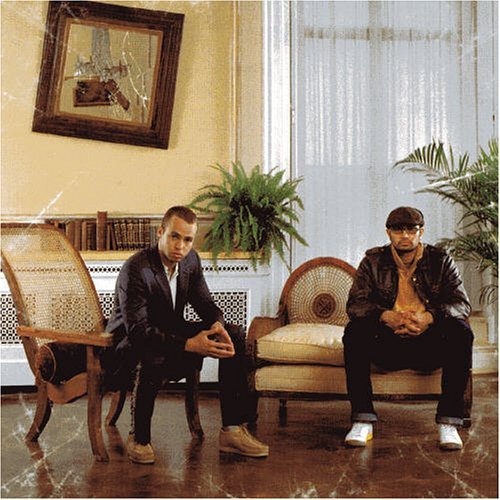
I've never been a huge fan of hip hop/ trip hop/ reggae etc. etc., but I gotta say, that Mattafix album is hot! Here's my review...

It's a rare event when you find edgy yet accessible music with a sociopolitical commentary that's worth listening to. Such is Mattafix's album, Signs of a Struggle--a mishmash of urban music that takes bits of hip hop, reggae, trip hop and soul and heat fuses them into a unified voice of struggle and hope. Fittingly, the songs range from the agreeable, anthemic "Big City Life" which is already in heavy rotation in most hip hop clubs, to more underground hits that will please casual listeners and aficionados alike. The dynamite production team, the nucleus of which is Preetesh Hirji and the talented lyricist Marlon Roudette, utilize a judicious mix of clean instrumentation and simple yet effective drum programming. "I to You" takes as its subject the confrontation between citizens of two nations at war, neither of whom are directly responsible for the tyranny and hate their leaders fuel, but who must still deal with the stereotypes that pervade both societies. In "Impartial", over a stuttering beat and quivering organ, a believer questions God's existence in a modern world where fundamentalists on all sides justify death in his name. The media becomes the target in "The Means", where a lonely guitar loop acts like repeating headlines that disguise government agendas. As the singer questions the lies being carried out on the air waves, a breakbeat mirrors his mindset, steadily becoming more frenetic and fractured as the track progresses.
Whether by design or accident, Mattafix have a surefire concept on their hands: an album that matches the voice of the rebellious youth with exactly the type of hip music these middle class intellectuals currently gravitate towards, that being smart urban beats. But you can't blame them. The fact is it's undeniably good and surprisingly refreshing. Mattafix takes the accessibility of cool urban music but rather than talking about dogging girls in da club, infuses it with heavy, meaningful critiques of oppression, 21st century war, miscarriages of justice and wrongful imprisonment. And like those sad issues, the fire in Signs of a Struggle won't be burning out any time soon.

Tuesday, March 28, 2006


Though its inhabitants went about their lives as if nothing had ever happened, they were all living in a radical trap. The city itself was a sex trap, a drug trap, an anti-establishment trap… where all the radical ideas and lifestyles and people could be easily contained, and more importantly, if need be, terminated. The city drew the outcasts of society: the freaks, the junkies, the apathetic rebels, the armchair philosophers, the sexpats, lushes, degenerates, whores, hippies, and losers. It brought them all together in an conveniently extinguishable portal of barely livable squalor… an easily maintained and closely, if imperceptibly, monitored locale. And the best part about it was that it worked all by itself. Its street credibility naturally drew the dregs of society from the ends of the Earth…


I HAVEN’T SLEPT… IN A YEAR.
This week I was hanging out with this Jewish American guy and he brought up a point I can’t stop thinking about. He is a well educated man—a medical doctor as a matter of fact—about 40 years old. Over a pint, he mentioned something about disliking German people. Hearing this blatant racism coming from educated person, I was a bit shocked. I asked why he felt this way, and he replied, “haven’t you ever heard of a little thing called the Holocaust? Someone named Hitler and his friends that killed a few million Jews?”

Of course I can understand being angry or upset about the Holocaust, and my sympathies lie with the Jewish people, but to hate all German people because of it? This to me seems a little… misaligned.

“What about the German people who had nothing to do with the Holocaust? What about a German kid that was born just 5 or 10 years ago, someone who had nothing at all to do with Holocaust, someone who wasn’t even alive at that time? Does that mean you dislike him or her, too?” I asked.

This guy replied affirmatively. In his opinion, the blood debt that Germans owe to the Jews transcends generations. Puzzled, I really tried to understand both sides of the issue:

On one hand, it could be argued that a person shouldn’t be held accountable for the deeds of their ancestors. Why should they be? They weren’t there. They had no part in the decisions that were made. Why should one person be held accountable for what transpired decades before they were even born?

On the other hand, how can we say that the good or evil one commits in life is nullified by one’s death? When Hitler died, did that make everything OK for the Jews? When Genghis Khan died, did all the millions of families he was responsible for slaughtering just say, “well, it’s all OK now. He’s dead, so we can just move on with our lives”? Of course not. That’s just stupid. But who can be held accountable? His children? His race? His countrymen?

How many people have to die to avenge a blood debt?

Let’s return to the Jewish Holocaust—what would make things all right between the Germans and the Jews? Would killing 4 million Germans make everything OK? How many Iraqis must be killed before the Bush administration is satisfied? If Osama Bin Laden, the admitted mastermind behind the Sept 11 attacks, is caught, tried, executed or whatever, will that make it OK for the families who lost members in 9/11? Conversely, do the Iraqi people have a right to hate me, an American, for what’s going on in their country now? I am adamantly opposed the war, but do you think that means anything to them? For generations to come, Iraqi people will most likely hate my children and my children’s children. Will their deaths justify the thousands of Iraqis being killed now by American troops?

Steven Spielberg’s film Munich deftly addresses this issue and also brings another point into focus—once you have the gumption and wherewithal to set the wheels of vengeance into motion, how can you stop them? When is a blood debt avenged? Who’s to say?

Consider the issue of repatriation—paying African Americans money as a way of apologizing for slavery… this concept seems ridiculous to me. Slavery is an unforgivable crime, and giving people money as a way of saying “sorry” is what I would call, “too little, too late.” It seems like more of an insult than anything. How can you assign a monetary value to something like that?

In light of these issues, I have to ask the question: is it even possible to right the wrongs of the past?

These questions have no easy answers. What’s disquieting, too, is that when I asked numerous people from a variety of backgrounds about this blood debt theory, almost all of the older (and assumedly, wiser) people (over 40) agreed with my friend—that a blood debt is carried by future generations, meaning that our children have to pay the evil we create. Encouragingly, many of the people under 30 I spoke with were more in favor of peaceful resolutions; in favor of forgiveness; in favor of studying history, learning from it, and moving on; in favor of seeing the past as something to be learned from, not something to be avenged. I just hope that we, as the younger generation, can retain that mindset when we are slighted in the future.


You try so hard to be cold
You try so hard to not show
I give you nothing to doubt--and you doubt me
I give you all that I have but you don’t see
Now I know that my eyes must close here
Every word seems to feel like you don’t care
But I know that you’re so confused and afraid
I just want to be one true thing that don’t fade
I don’t want to give up tomorrow
I just can’t understand why we’re going on

You try so hard to be heard
You try so hard to not hurt
I give you nothing to doubt, and you doubt me
I give you all that I have but you don’t see
Now I know that my eyes must close here
Every word seems to feel like you don’t care
But I know that you’re so confused and afraid
I just want to be one true thing that don’t fade
I don’t want to give up tomorrow
I just can’t understand why we’re going on

I don’t want to be sad
I don’t want to be scared
I won’t wait for you in silence
--B.R.M.C.

Thursday, March 16, 2006


BRING ME OUT OF THE DARK

Tuesday, March 07, 2006

Yesterday, I was reading an interview my good friend Lekha Shankar did with one of my favorite Thai filmmakers, Pen-ek Ratanaruang. He was mostly talking about his career as well as the release of his newest film, Invisible Waves, which I saw at the opening of the Bangkok Film Festival last month.

Pen-ek studied Art History at the Pratt Institute in New York with the intention of having a career working in museums. Somehow he ended up at an advertising agency, though, first in the Big Apple, and then in here in the Big Mango. He did that for nearly a decade before he decided filmmaking was his true calling. Some of his most well known films are Last Life in the Universe, Monrak Transistor, and 6ixtynin9. He is a visionary filmmaker and his work is quirky, off beat, humorous, and fun to watch. Last Life in the Universe and Invisible Waves both utilize world famous cinematographer Christopher Doyle (2046, Chungking Express, Hero) as well as the talented Japanese actor, Asano Tadanabe.

The surprising thing was that in the interview Pen-ek admits his all-time favorite noodle shop is a little place on Sukhumvit Soi 49. He said, “I wish my films would look and feel as assured as the noodles from this shop.” That’s the soi that I live on, and there’s only one noodle stand on this soi that I know of, so I walked across the street to have a bowl of kwatio there for lunch.

Just as my noodles were served, guess who walked in? It’s funny because he was wearing the exact same clothes that he has on in a press photo that’s been sitting in my desk at work for a year. Pen-ek was obviously a favored customer at this shop as the chef and the owner were both giving him big hugs and asking what he’s been up to. It was a pretty weird coincidence. Or maybe he comes there everyday? Who knows. I wanted to turn around and say something, but every time I do something like that it ends up sounding so stupid. “Hi, uh… I’m here because I just read and interview with you and, errr… I really like your films.”

That would just be so gauche…

Monday, February 27, 2006


It seems religious fanaticism is hitting another peak these days. Between the Christian Right and their agenda in the US and the militant Islamic forces in the Middle East and Asia, it seems people are more willing to die for their faith now that at any other time in the past 20 years. This is strange to me. One would think that as time progressed forward, people's minds would become more open to what's going on around them in the world, and the wide gap in differences of beliefs.

Can't people realize that this is the only world we have and we have to live together to make it work?

I realize there are a lot more forces at work than simply faith, but such religious conservatism seems strange to me in the 21st century.

I just started reading a cool new book by one of my favorite authors, Jon Krakauer. Known for his forays concerning extreme physical adventure such as Into Thin Air and Into the Wild, this new book is a exploration of spiritual extremes. In Under the Banner of Heaven, Krakauer examines the history of one of America's strangest religious orders, the Mormon Fundamentalists. Notorius for their polygamous beliefs and practices, the men in this religion believe it is their divine obligation to take multiple wives, many of which are already related to them as part of their own family. Incest, molestation, and rape run rampant in these secluded societies in Colorado, Utah, and British Colombia. The head of their order, who is believed to be God's mouthpiece on Earth, divides the women up amongst the men, many times marrying girls as young as 14 to men twice or three times their age. These women become like sex slaves, and are so indoctrinated by the church itself, many times they accept their lives of servitude without question. This life is all they know. Mormon Fundamentalists are forbidden to read books, magazines, newspapers or watch television or films from the outside world. They live in these weird little bubbles with their gargantuan, sprawling families, ruled by the church itself. It's a facinating and extremely well researched book.


Fate is a tricky thing. Is it something we can control? I'm not so sure.

I saw a cool movie at the Bangkok Film Festival yesterday called Once You are Born, You Can No Longer Hide. It's about this 14 year old kid who is the son of an affluent factory owner in Northern Italy. One weekend he goes saling on his uncle's yacht, and while everyone is asleep, goes up on deck and accidentally slips off the boat in the middle of the Mediterranean. A few days later, he is rescued by an overloaded ship of Middle Eastern, African, and Eastern European immigrants on their way to Italy. It's a rowdy bunch, and they can tell he's a rich man's son. Two of the men want to hold him for ransom, others want to just throw him back in the sea. A Croatian boy a little older than him and his sister come to his resue and protect him from the dangerous men.

When they finally get to Italy, the boy convinces his parents to adopt the 2 Croats that he became close to on the ship. The parents agree, joyous their son is alive and eager to please him in any way they can. But there are complications in adopting illegal immigrants, and when the authorities find the elder boy has a criminal record, they want to ship him home, separating the siblings. Desperate and unwilling to be apart, the Croatians steal from the rich Italian family and take flight into the city in hopes of staying together.

The ending of the movie is kind of weird, so I won't really get into it, but what struck a chord with me was that here is a family that wants to do a good thing: adopt these 2 Croatian children and give them a better life, but they are prevented by red tape and diplomatic processes; aka, by the System.

Don't hate the player, hate the Game.

What is the difference between these 2 boys? Fate. Luck. One was born to a rich family and was afforded all sorts of opportunities. One was born to a poor family in a war torn country, and was afforded very limited opportunities, if any at all. Is there anything one person can do to change their fate? The message that Once You are Born, You Can No Longer Hide is telling us is, "no". If you are born into a certain class, a certain position, there is actually very little we can do to change that. There are already so many processes in place to keep you in the same spot that you were born in. The opportunites you have in life are dictated, in some degree at least, by class.

Does giving this beggar on the street a dollar actually change anything for them? In the short term, yes, they might be able to have a meal or do whatever it is they need to do. In the long term, not really. I had a professor in college who once said it would be better to let the beggars die, in the hopes that their death might galvanize some kind of change, instead of letting them eek out a nameless living in the shadows of society, living off scraps and trash of the world.

I don't really subscribe to either theory, personally. I think fate does play a big role in our lives, but I also believe that we as humans possess the power to change our fate. We can control it, if we really want to. But it's not easy.